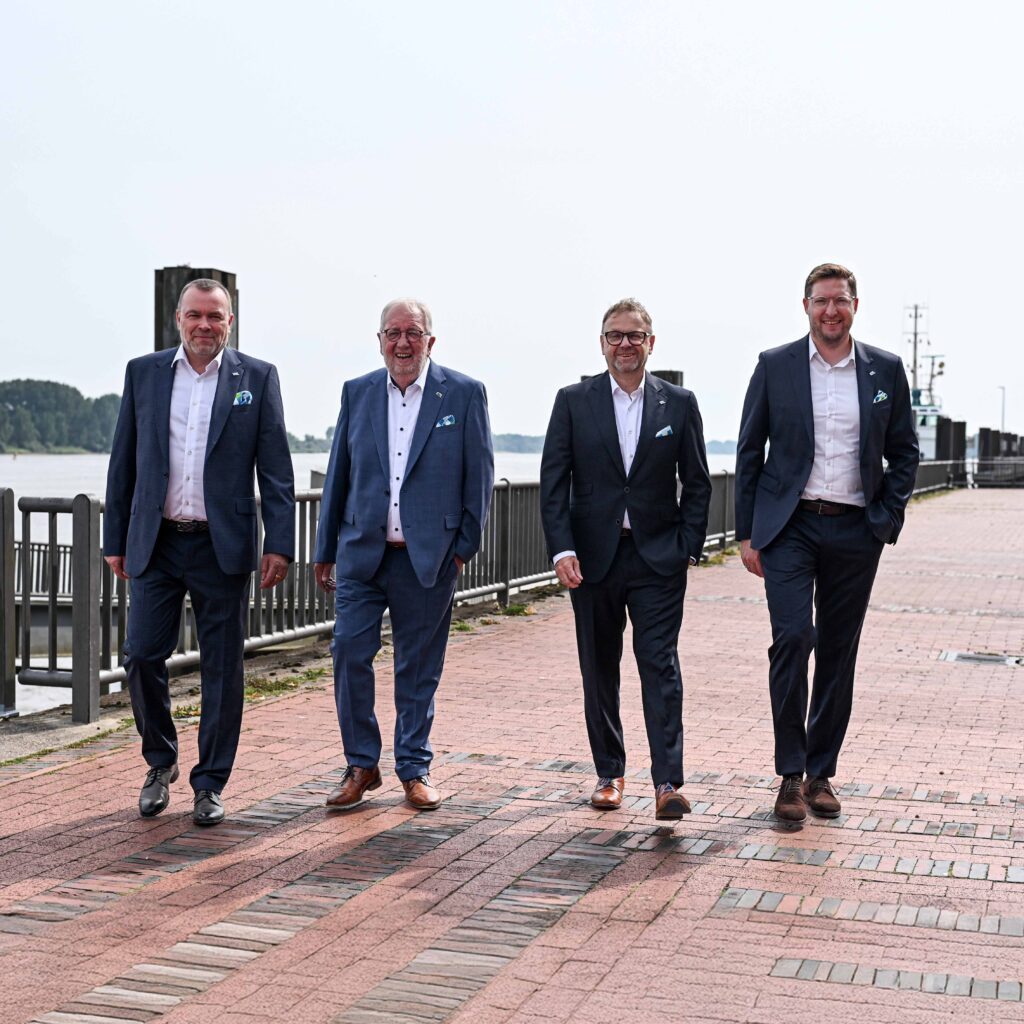

The L.I.T. Board (from left to right): Simeon Breuer, Fokke Fels, Ingo Schreiber, and Julian Lachnitt.
The L.I.T. Group operates in 2025 within a challenging market environment. Volatile demand, a shortage of drivers, as well as new opportunities arising from digitalization and international expansion, shape the business landscape. In this context, board members Fokke Fels, Simeon Breuer, Julian Lachnitt, and Ingo Schreiber explain how networked structures and strategic partnerships form the foundation for sustainable growth.
Fokke Fels: In this environment, 2025 presents significant challenges. We are experiencing extreme volatility – from calm periods to genuine surges in demand and back again. Specifically, we see a quiet first quarter, followed by a »wild« second quarter, another period of calm in the third quarter, and likely an intense fourth quarter. These fluctuations underscore the need for the Group to operate in a highly networked manner and to intelligently orchestrate our various business divisions.
Simeon Breuer: The high level of dynamism was particularly noticeable during the short holiday weeks in spring and summer. During this period, we reached our capacity limits, as there was very little additional cargo space available on the market. Therefore, we must act counter-cyclically – building capacity early in order to be able to respond during peak periods. The challenge lies in ensuring that this approach remains economically viable.
Ingo Schreiber: The shortage of drivers continues to be a significant challenge for our operations. We also observe that the issue is becoming structurally more severe: during quieter market periods, many drivers leave the industry to pursue employment in other sectors. Once these professionals depart, they are often no longer available in the long term, which further reduces overall cargo capacity in the market and increases competitive pressure.
We have recognized that the solution to this challenge goes beyond simply offering higher wages. It requires the creation of a comprehensive network of touchpoints and support services for our drivers. Our driver hubs at the locations of Brake, Bremen, Wolfsburg, Kassel, and Koblenz are much more than parking facilities – they serve as community hubs equipped with kitchens, laundry facilities, and sleeping quarters. This infrastructure not only enhances driver retention but also strengthens our ability to attract and integrate new talent, ensuring operational continuity and maintaining high service standards even in a tight labor market.
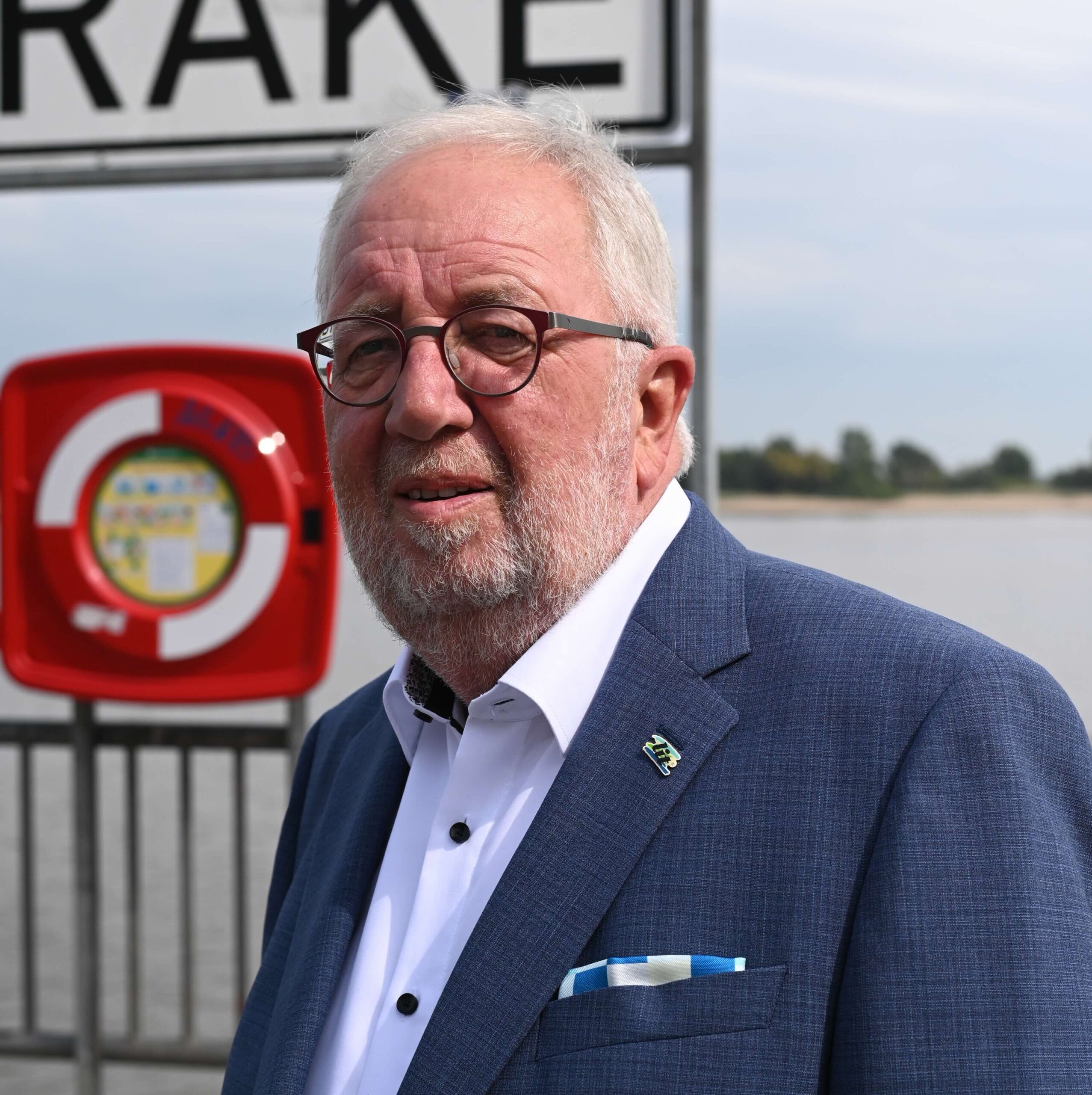
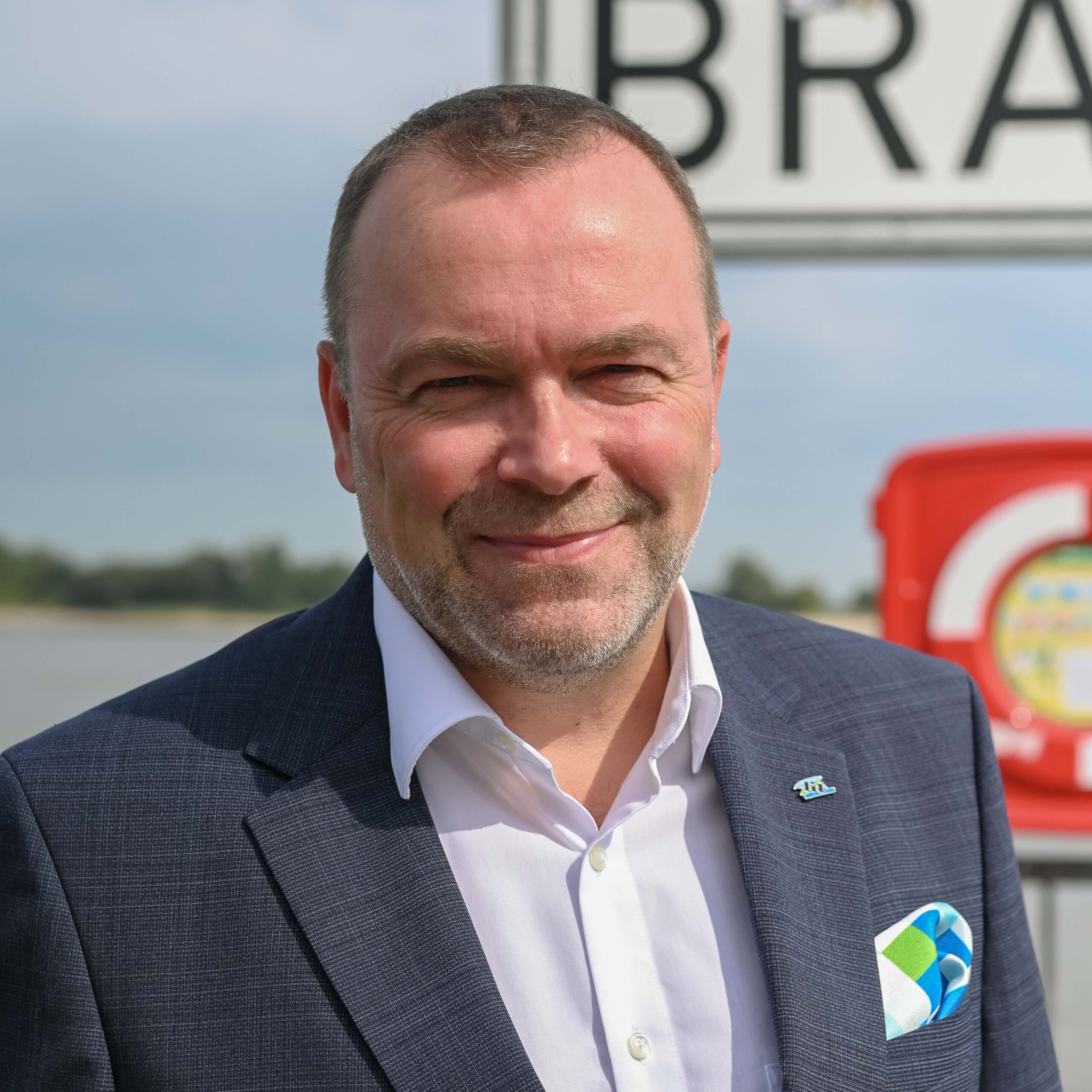
Fels: This is one of our greatest success factors as a corporate group. When a contract logistics customer also requires transport services, the respective division steps in. And when specialized personnel are needed for logistics centers, the HR logistics team provides support. These types of connections are created on a daily basis and serve to strengthen the Group as a whole.
Breuer: During acquisitions and the establishment of new companies, this becomes particularly evident. Synergies only emerge through an understanding of the respective business. Transparency achieved through volume flow analyses and process harmonization is key. Many of our companies have developed their own structures and processes over decades that work well independently but do not align with our current standard for an integrated, networked L.I.T. system.
Julian Lachnitt: It depends on the specific market. First, we assess whether reliable local partners are available and whether the existing business volume is sustainable. In addition, we always evaluate which solution is faster and better suited to the respective situation.
Breuer: Our business is a people-driven business. When a suitable and reliable partner is not available, we need local entrepreneurs who are willing to operate within the L.I.T. Group’s processes. The existing volume is also critical: establishing our own structures makes sense primarily in markets where we already manage significant flow volumes and where moving away from agents provides a genuine added value. Markets without relevant traffic flows are therefore currently not considered. Each decision is ultimately made on a case-by-case basis.
Lachnitt: Digitalization is our network enabler. We have already implemented an AI-based solution that automatically converts unstructured incoming documents into transport orders. While this may sound technical, the underlying objective is to ensure that all locations operate with the same streamlined and efficient processes
Breuer: In the transport sector, leverage a range of targeted digital tools. Through NeoCargo, cargo searches are now largely automated, saving time and increasing productivity. Additionally, our new Data Warehouse provides full transparency during acquisitions without immediately requiring new companies to migrate to a different TMS. This facilitates smoother integration and allows us to remain flexible.
Fels: Finding and connecting the right people is at the heart of our company’s mission. Recruiting today goes far beyond simply attracting new drivers – skilled professionals in other areas, such as dispatch, administration, or warehouse operations, are also increasingly difficult to find. Traditional training and development alone are no longer sufficient, which is why we are creating new and innovative programs. These initiatives provide career perspectives, enhance employee retention, and ensure that we meet our long-term demand for skilled personnel.
Equally important is providing employees with enough freedom to take initiative. Those who want to make an impact find a platform at L.I.T. – whether through formal training, new opportunities within the Group, or independent projects. L.I.T. thrives on the fact that people bring forward their ideas and assume responsibility, which is central to our culture and long-term success.
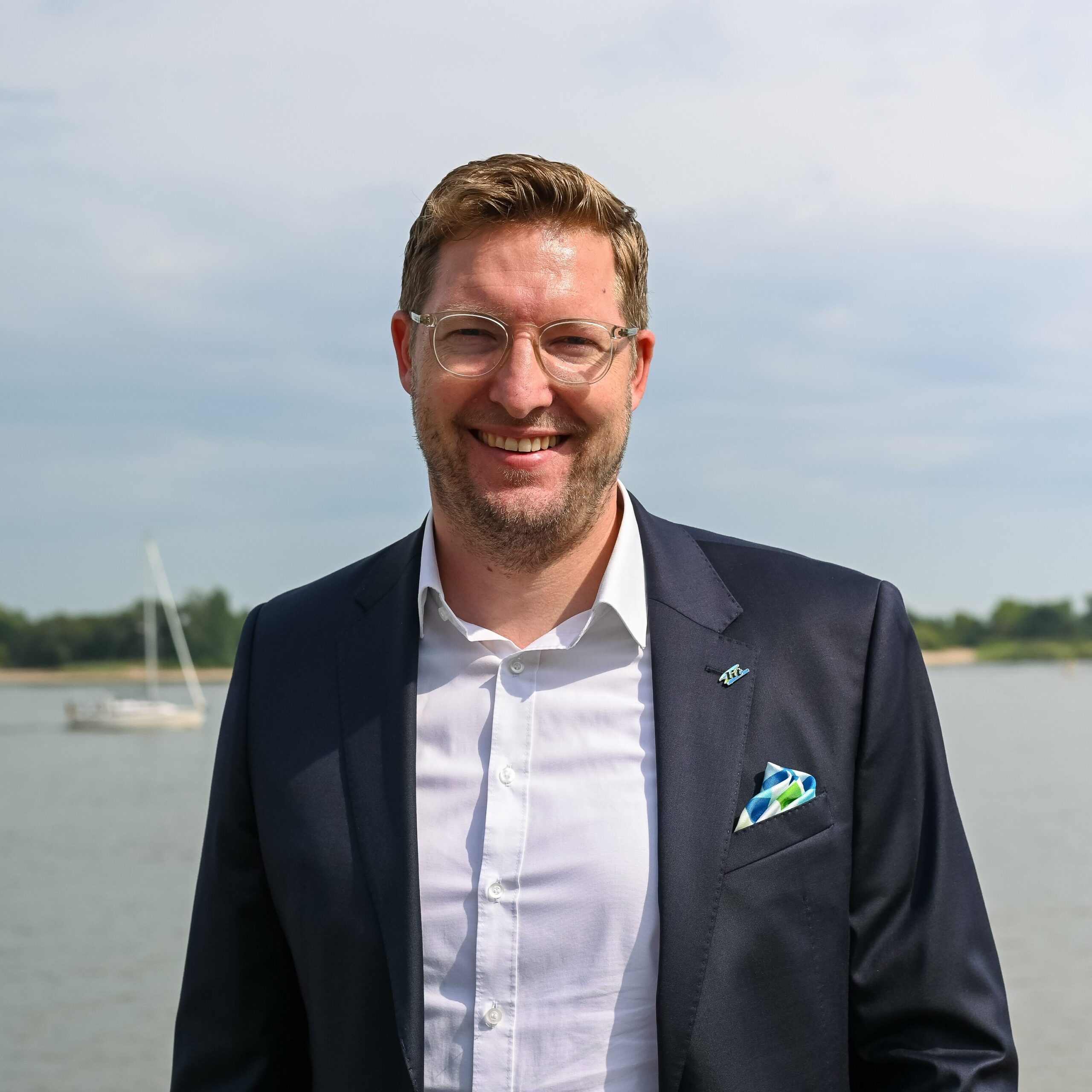
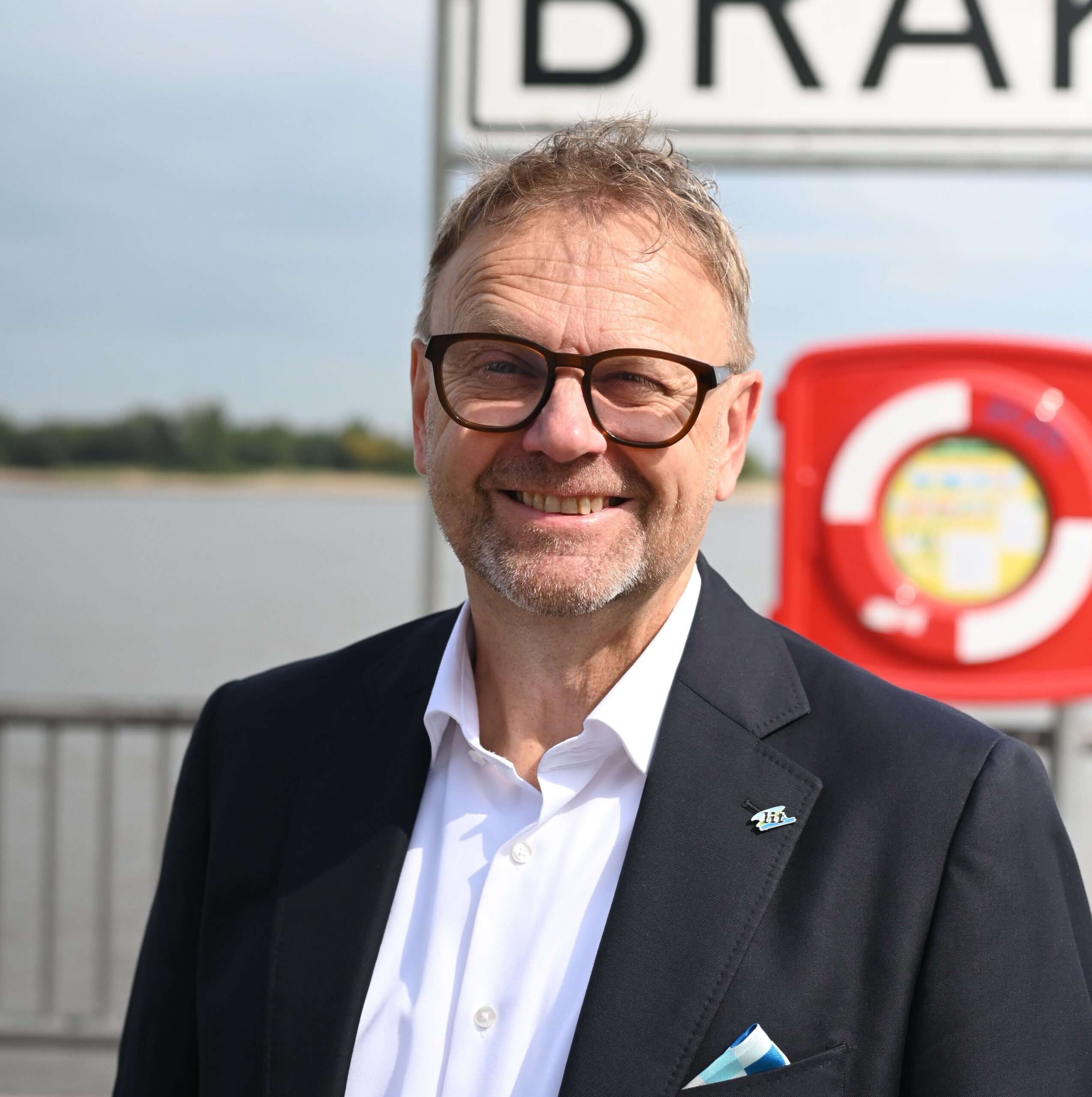
Breuer: Sustainability only works in an integrated approach – ecology and economy must go hand in hand. Our goal is to reduce our CO2 footprint while continuing to grow. To achieve this, we rely on an intelligent and intermodal network. We have recently expanded it further, for example with new connections to Scandinavia. Long-distance transport is deliberately shifted to rail and ferry, while trucks are primarily used for first- and last-mile operations. This way, we combine economic efficiency with ecological responsibility.
Schreiber: Our first electric trucks are already in operation, for example on the Brake – Bremen route. Drivers have responded very positively. However, infrastructure remains a bottleneck: electric trucks are ideal for regional operations, but charging infrastructure is still lacking for long-haul routes. Hydrogen technology remains a promising alternative, though it is not yet widely accessible. The key point is that there is no single solution – we combine multiple approaches and adjust them for each business case in collaboration with our customers and partners.
Breuer: The market will remain volatile. That is precisely why our networked structures are so valuable. I see growth primarily in Europe, for example in France, and internationally in the United States, where we are currently launching our first contract logistics projects. As has already been mentioned, logistics remains a people-driven business. Digitalization and AI will make our processes more transparent and efficient, but ultimately, we always need employees to maintain customer contact and nurture relationships. The critical factor is ensuring that our IT, process, and personnel structures can keep pace with growth. We do not think in rigid revenue targets, but in terms of the capacity of each unit within our Group. This approach allows us to remain flexible and achieve sustainable growth even in a volatile market.
Fels: The future lies in the intelligent integration of our business divisions. When HR and contract logistics, transport, and fleet management function seamlessly together, we can deliver innovative and unique solutions that no competitor can easily replicate. This integration is at the very core of our DNA: not pursuing growth for its own sake, but leveraging intelligent networking. Internal networks between colleagues, external networks with customers and partners, and international networks opening access to new markets – all of these elements strengthen resilience, enhance efficiency, and ultimately support continuous, scalable, and sustainable growth across the Group.
Dass Familienfreundlichkeit in der Unternehmenspraxis fest verankert ist, zeigte sich in den vergangenen Monaten besonders deutlich. So konnten Mitarbeitende am Standort Brake im Sommer erstmals die Ferienbetreuung der Gemeinde Ovelgönne nutzen, ein Angebot, dessen Kosten die L.I.T. Gruppe anteilig übernommen hat. Aufgrund der positiven Resonanz wird diese Unterstützung künftig fortgeführt und weiter ausgebaut.
Bereits seit 2024 ist die L.I.T. Gruppe Mitglied im Verbund familienfreundlicher Unternehmen Wesermarsch/Friesland e. V. Seit 2025 gehört das Unternehmen zudem dem bundesweiten Netzwerk »Erfolgsfaktor Familie« an. Diese Mitgliedschaften ermöglichen einen intensiven Erfahrungsaustausch mit anderen Unternehmen und liefern wertvolle Impulse für eine moderne und mitarbeiterorientierte Personalpolitik.
Irina Schwarz, Leiterin Personalmanagement, betont:
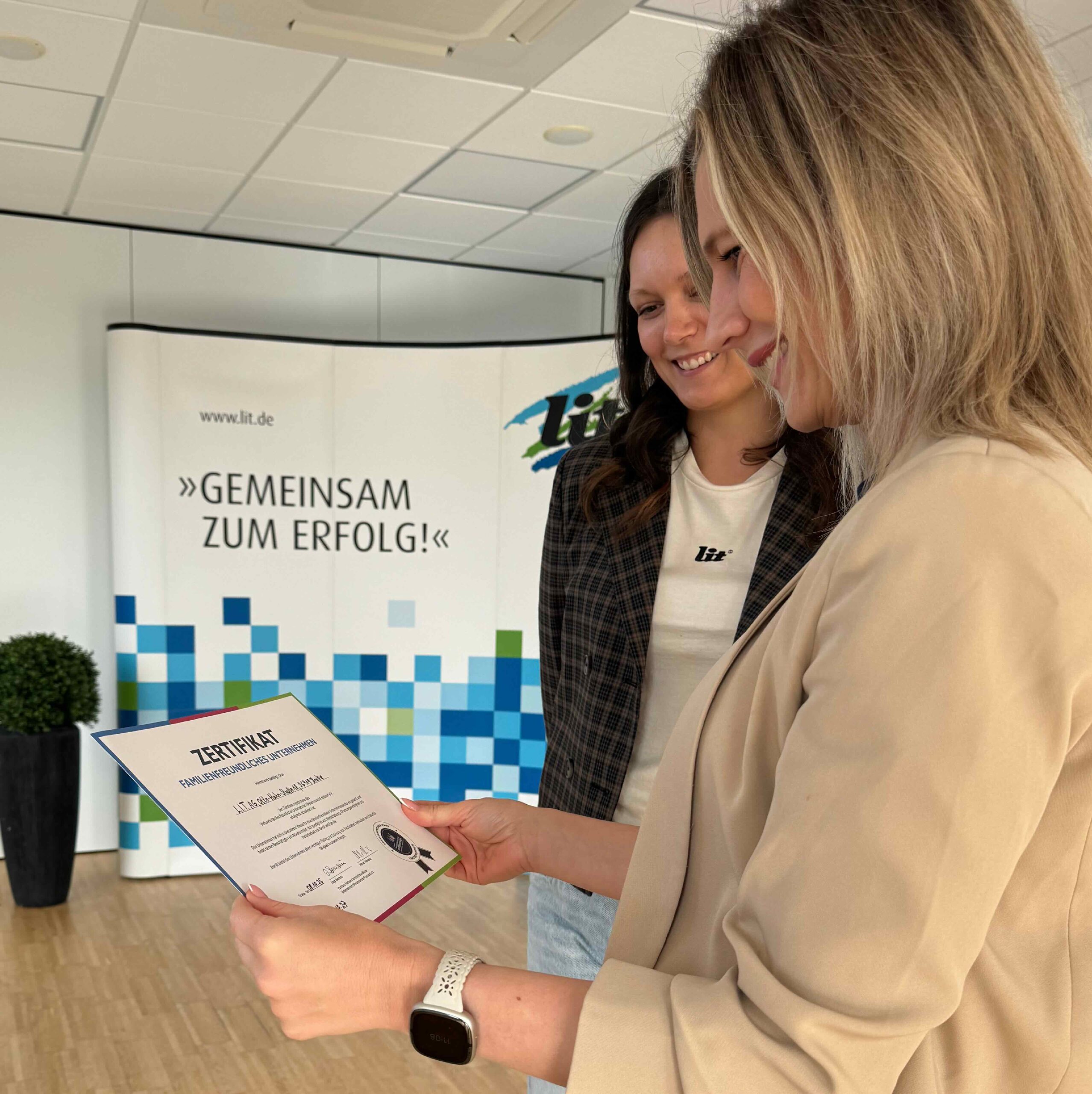
Für die L.I.T. Gruppe ist die Auszeichnung ein wichtiger Meilenstein. Das Unternehmen sieht sie als Ansporn, gemeinsam mit den Mitarbeitenden weitere Angebote zu entwickeln, die den Alltag erleichtern und eine nachhaltige Vereinbarkeit von Beruf und Familie fördern. Familienfreundlichkeit soll ein selbstverständlicher Bestandteil der Unternehmenskultur bleiben und kontinuierlich weiterwachsen.
© 2025 L.I.T. AG · Otto-Hahn-Straße 18 · 26919 Brake Data protection | Imprint | Gender regulation | Manage consent | Complaint form | AGB
© 2025 L.I.T. AG · Otto-Hahn-Straße 18 · 26919 Brake
Data protection | Imprint | Gender regulation | Manage consent | Complaint form | AGB
© 2025 L.I.T. AG
Otto-Hahn-Straße 18 · 26919 Brake
Data protection | Imprint
Gender regulation | Manage consent
Complaint form | AGB