

CONNECTING INDUSTRIES, UNLOCKING POTENTIAL.
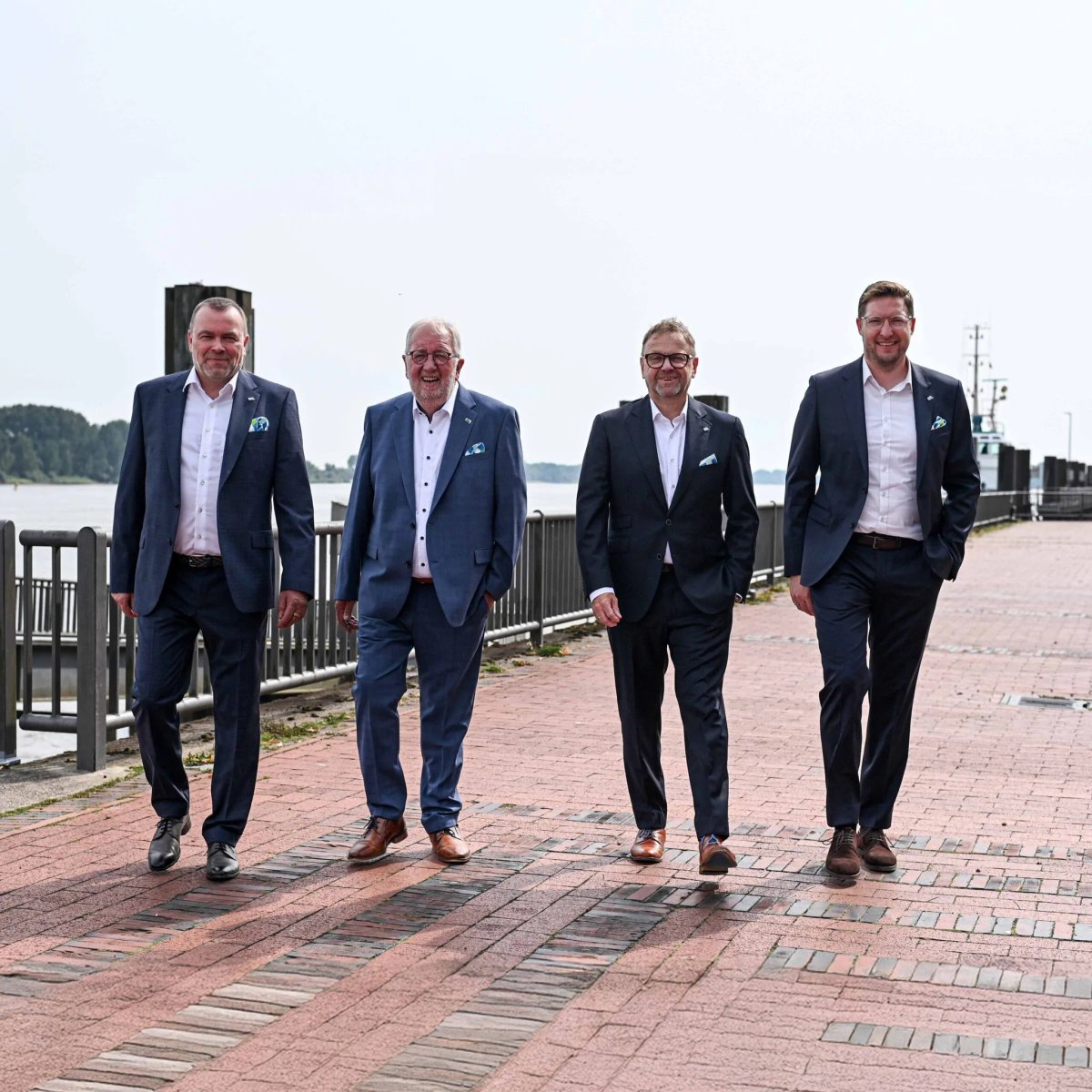
The L.I.T. board discusses networked structures and strategic partnerships.
The L.I.T. board (from left to right): Simeon Breuer, Fokke Fels, Ingo Schreiber, and Julian Lachnitt.
In 2025, L.I.T. Gruppe is operating in a challenging market environment. Volatile demand, driver shortages, and new opportunities arising from digitalization and international expansion are shaping the business. In this interview, board members Fokke Fels, Simeon Breuer, Julian Lachnitt, and Ingo Schreiber explain how networked structures and strategic partnerships form the foundation for sustainable growth.
Given the tense economic situation in 2025, many industries are facing significant challenges. The logistics sector is also feeling the impact clearly, whether through fluctuating demand, rising costs, or structural bottlenecks. Against this background, what is the current market situation for L.I.T. Gruppe?
Fokke Fels: The year 2025 is definitely challenging. We are experiencing extreme volatility – from quiet phases to outright demand explosions and back again. Specifically, we see a quiet first quarter, then a "wild" second, calm again in the third, and likely an intense fourth quarter. These fluctuations underscore that we, as a group, must act in a networked manner and intelligently orchestrate our various business areas.
Simeon Breuer: The high level of dynamism was particularly noticeable during the short holiday weeks in spring and summer. During this time, we reached our capacity limits because there was hardly any additional cargo space available on the market. Therefore, we must act counter-cyclically: build capacity early to be able to react during peak times. The challenge lies in making this approach economically sensible at the same time.
How is L.I.T. Gruppe addressing these challenges in the area of driver and fleet management?
Ingo Schreiber: The driver shortage is our constant companion. We also notice that the problem is structurally worsening: in quieter market phases, many drivers leave the industry and seek employment in other sectors. These skilled workers are then often permanently unavailable, which further reduces the total cargo space in the market.
We have recognized that the solution to this challenge does not lie solely in higher wages, but in building a genuine network of various contact points and services. Our driver hubs at the Brake, Bremen, Wolfsburg, Kassel, and Koblenz sites are more than just parking spaces – they are meeting places with their own kitchens, washing machines, and sleeping quarters. This infrastructure helps not only in retaining our drivers but also in attracting new colleagues.
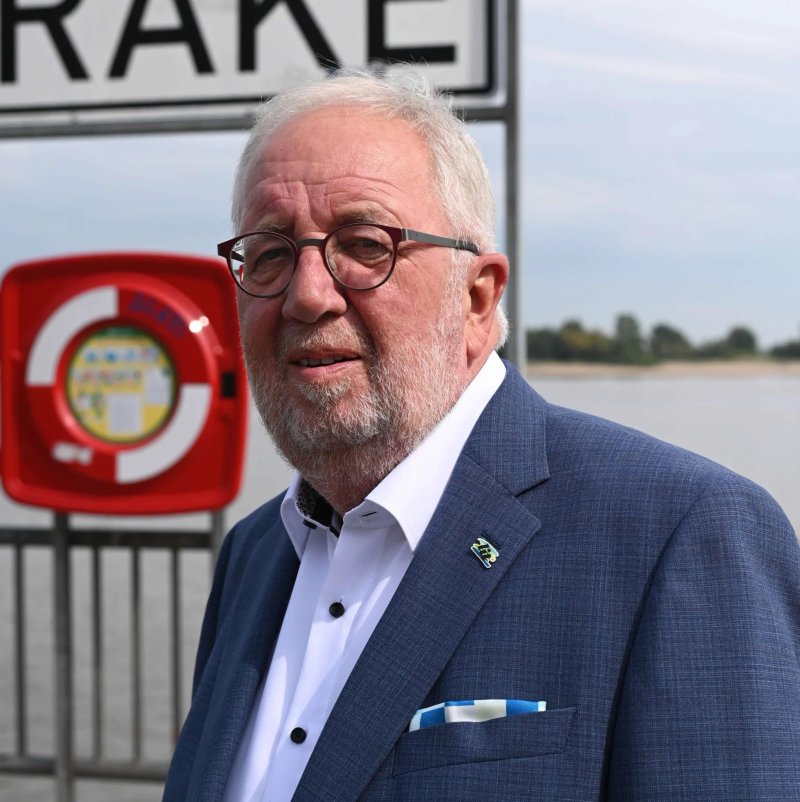
Fokke Fels focuses on the intelligent networking of business areas – the heart of the L.I.T. strategy.
»Synergies only arise through an understanding of the respective business.«
Simeon Breuer, Board Member of L.I.T. Gruppe
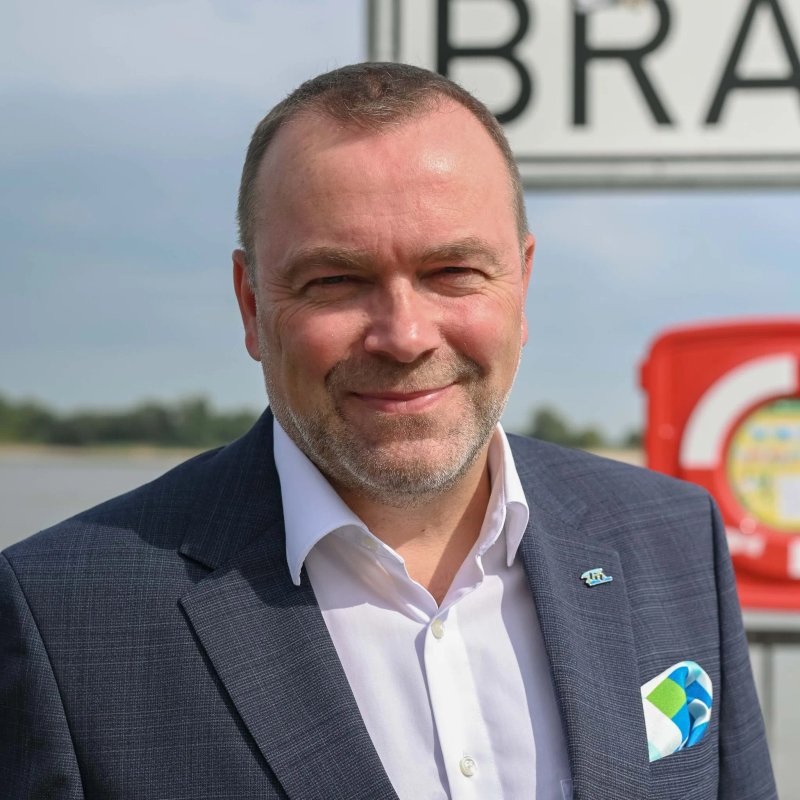
Simeon Breuer, Managing Director of L.I.T. Speditions GmbH and board member of L.I.T. Gruppe, sees growth primarily through synergies, internationalization, and sustainable networks.
How does this networking work in other areas – keyword: cooperation between companies?
Fels: That is one of our greatest success factors as a corporate group. If a Contract Logistics customer requires additional transport services, the corresponding division steps in. And when it comes to specialized personnel for logistics centers, Personnel Logistics provides support. Such connections arise daily and strengthen the entire group.
Breuer: This becomes particularly clear with acquisitions and new foundations. Synergies only arise through an understanding of the respective business. Transparency through volume flow analyses and process alignment are the key. Many companies have developed their own structures and processes over decades that worked well in isolation but do not fit our current requirement for a networked L.I.T. system.
Internationalization is a decisive growth factor for many companies. How do you approach this: do you rely on partners or your own structures?
Julian Lachnitt: That depends on the respective market. First, we check whether there are reliable local partners and whether the existing business volume is sustainable. Furthermore, we always weigh which solution is faster and more precise for the specific case.
Breuer: Our business is a people business. If there is currently no suitable partner available, we need entrepreneurs on-site who are willing to work within L.I.T. Gruppe. The existing volume is also important: our own structures are worthwhile primarily where we already have significant volume flows and the switch away from an agent also brings real added value. Markets without relevant traffic are therefore currently out of the question. Every decision is ultimately a case-by-case assessment.
What role does digitalization play in the integration of new companies into the group?
Lachnitt: Digitalization is our network enabler. We have already implemented an AI solution that automatically converts unstructured incoming documents into transport orders. That sounds technical, but behind it is the idea that all locations can work with the same efficient processes.
Breuer: In the transport sector, we also rely on concrete digital tools. Cargo searching is now largely automated via NeoCargo. This saves time and increases productivity. With our new data warehouse, we gain transparency during acquisitions without having to immediately switch companies to a new TMS. This facilitates integration and keeps us flexible.
Networks consist not only of locations and processes but above all of people. How important are employees as part of the corporate network?
Fels: Finding and connecting the right people is our central task. Recruiting has long since meant more than just winning new drivers – skilled workers in other areas such as dispatch, administration, or in the warehouse are also hard to find today. Classic education and training alone are no longer enough, which is why we are developing new, creative concepts. In doing so, we create perspectives, increase loyalty, and cover our long-term demand for skilled workers.
I find it particularly important that employees with initiative have enough freedom here. Anyone who wants to make a difference will find a platform with us: whether through formal training, new deployment opportunities within the group, or through their own projects. L.I.T. thrives on people contributing their ideas and taking responsibility.
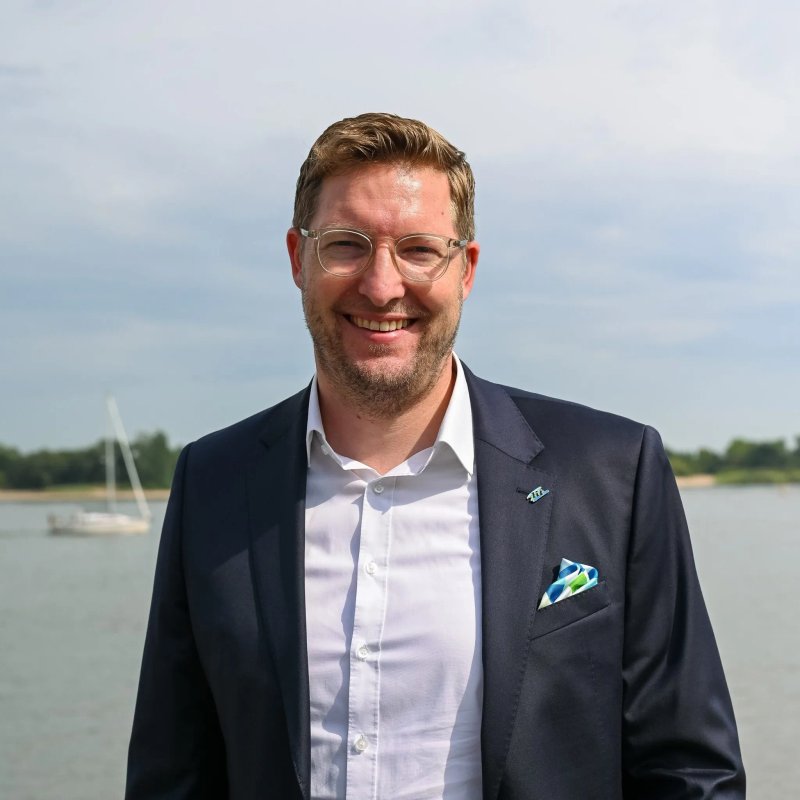
For Julian Lachnitt, Managing Director of L.I.T. Lager & Logistik Holding GmbH and board member of L.I.T. Gruppe, digitalization is a key factor for efficient processes in the company.
»Digitalization is our network enabler.«
Julian Lachnitt, Board Member of L.I.T. Gruppe
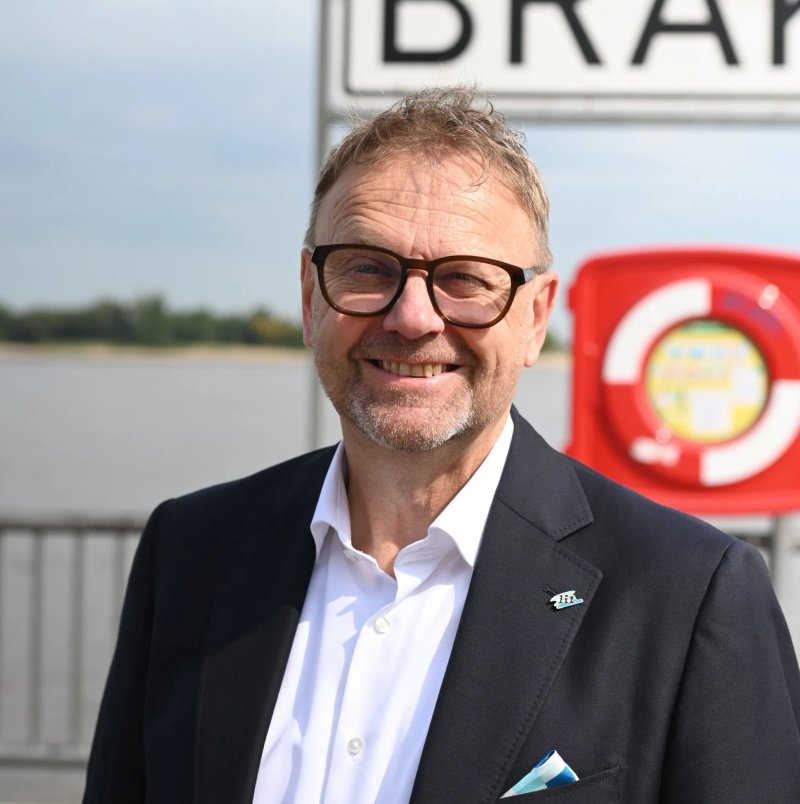
Ingo Schreiber, Managing Director of L.I.T. Cargo GmbH and board member of L.I.T. Gruppe, focuses primarily on driver retention – with modern hubs, infrastructure, and new ideas in fleet management.
»We combine different approaches and adapt them depending on the business together with customers and partners.«
Ingo Schreiber, Board Member of L.I.T. Gruppe
Sustainability is increasingly becoming a strategic factor for companies – not only out of ecological but also out of economic responsibility. What role does this topic play in your network strategy?
Breuer: Sustainability only works in a network: ecology and economy must go hand in hand. Our goal is to reduce our carbon footprint despite simultaneous growth. To this end, we rely on an intelligent and intermodal network. We have recently expanded it further, for example with new connections to Scandinavia. We consciously shift long distances to rail and ferry; the truck primarily handles pre- and on-carriage. In this way, we combine economic efficiency with ecological responsibility.
Schreiber: The first electric trucks are already in use with us, for example on the Brake–Bremen route. The drivers view this very positively. But the bottleneck is still the infrastructure: electric trucks are ideal for regional operations, but the charging base is missing in long-haul transport. Hydrogen remains an exciting option but is currently not yet widely available. The decisive factor is: there is no single solution. We combine different approaches and adapt them depending on the business together with customers and partners.
Given the dynamic market conditions and increasing complexity in logistics: where is L.I.T. Gruppe heading strategically – and where do you see the company in the coming years?
Breuer: The market will remain volatile. But that is precisely why our networked structures are so valuable. I see growth primarily in Europe, for example in France, and internationally in the USA, where we are just starting our first Contract Logistics projects. As has already been said: logistics remains a people business. Digitalization and AI will make our processes more transparent and efficient, but in the end, it always takes employees who maintain contact with the customer and cultivate relationships. It is crucial that our IT, process, and personnel structures can keep pace with growth. We do not think in rigid revenue targets, but in the capacities of each unit of our group. This is how we ensure that we remain flexible and can grow sustainably even in a volatile market.
Fels: The future lies in the intelligent linking of our business areas. When personnel and Contract Logistics, transport, and fleet management seamlessly interlock, unique solutions emerge that no competitor can copy so quickly. And that is exactly our DNA: not size at any price, but intelligent networking. Internal networks between colleagues, external networks to customers and partners, international networks for new markets – all this makes us more resilient as a company and ultimately enables continuous and sustainable growth.