


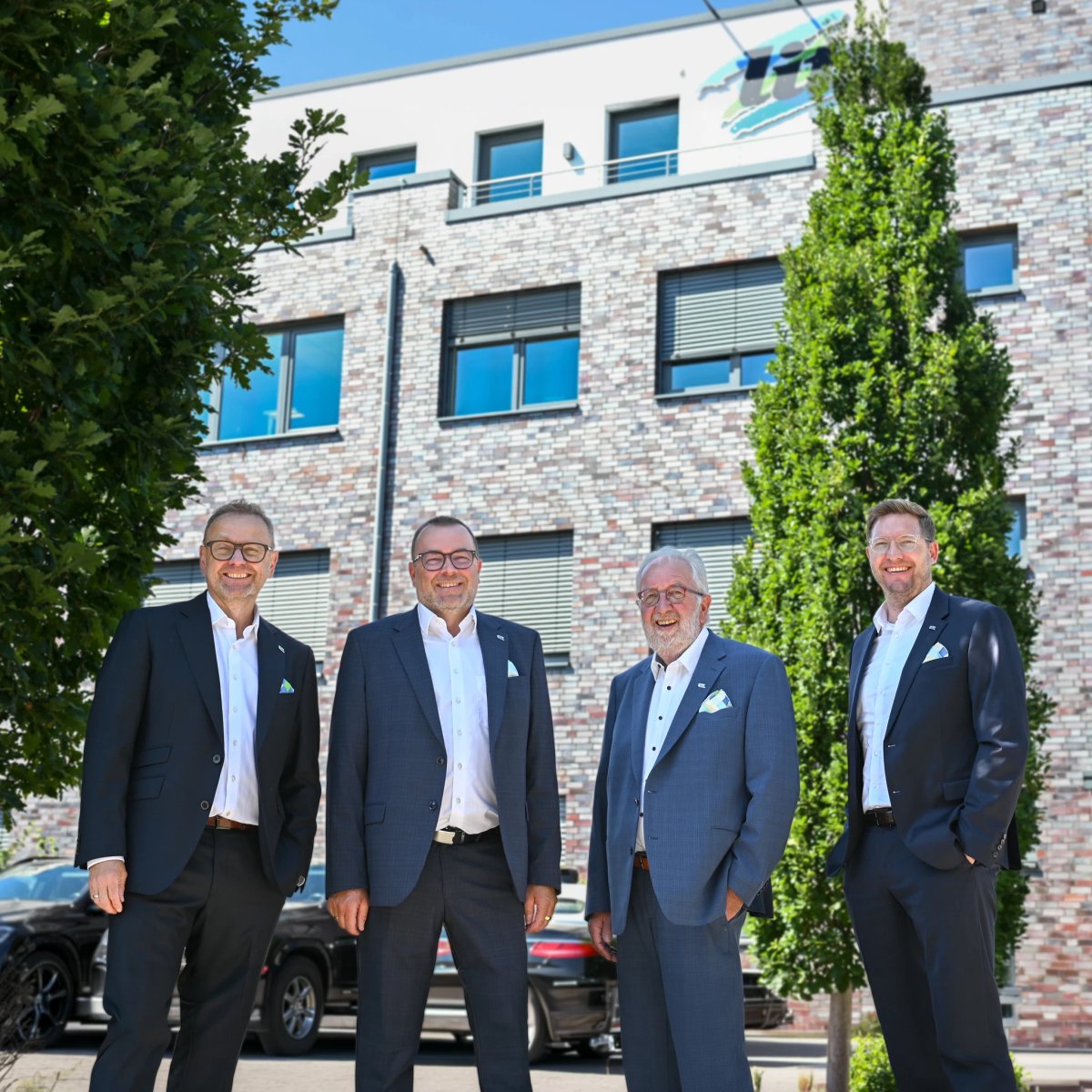
After a year 2025 marked by volatility and significant challenges, 2026 represents a period of stabilization for L.I.T. However, the market environment remains demanding. In this interview, Managing Board members Fokke Fels, Simeon Breuer, Julian Lachnitt, and Ingo Schreiber explain how industry shifts are impacting the group, the strategic measures being taken in response, and where they identify potential for further growth.
This L.I.T.eratur marks the tenth issue of the magazine. Looking back at the first issue in 2017: How has L.I.T. changed since then, and what has remained the same? FOKKE FELS Our path of expansion really gained momentum back then, for instance with the acquisition of the Bremen-based freight forwarding company Compass Logistics International and the Kieserling brand as of January 1, 2018. Since then, we have grown continuously. A particular milestone was exceeding the one-billion-euro revenue mark in 2025. The L.I.T. Group has followed a steady trajectory of expansion and growth in the recent years. How do you assess the market situation in 2026? JULIAN LACHNITT To assess 2026, we should look back at 2025 – a year defined by volatility and headwinds. The automotive sector in particular is undergoing profound structural transformation, driven by e-mobility and increasing competition from the Chinese market. Shifts in production and supply chains toward Eastern Europe and North Africa are directly impacting the logistics industry, but at the same time, they open up new avenues for expansion. How are you managing to stabilize this development? SIMEON BREUER In the past, we were always very open to experimentation and tended to say »yes« when in doubt. Currently, we operate with greater prudence and are more inclined to say »no« first. You mentioned the automotive sector. What other developments – including geopolitical factors – are shaping the business? SIMEON BREUER Naturally, the ongoing conflicts in the Middle East and the situation surrounding the Strait of Hormuz directly affect us daily at the fuel pump. Temporary relief measures, such as fuel tax cuts, yield short-term benefits for retail consumers, but offer little reprieve for the transport sector. On the contrary: most of our transport agreements are tied to market prices via fuel floater clauses, which adjust remuneration based on historical average values. When a tax rebate expires and prices spike, we buy fuel at high spot rates while contractual rates remain temporarily pegged to artificially lowered levels. During this transition phase, we bear the margin shortfall ourselves. In an already volatile environment, such added financial strain can pose an existential threat, particularly to smaller transport providers. |
|
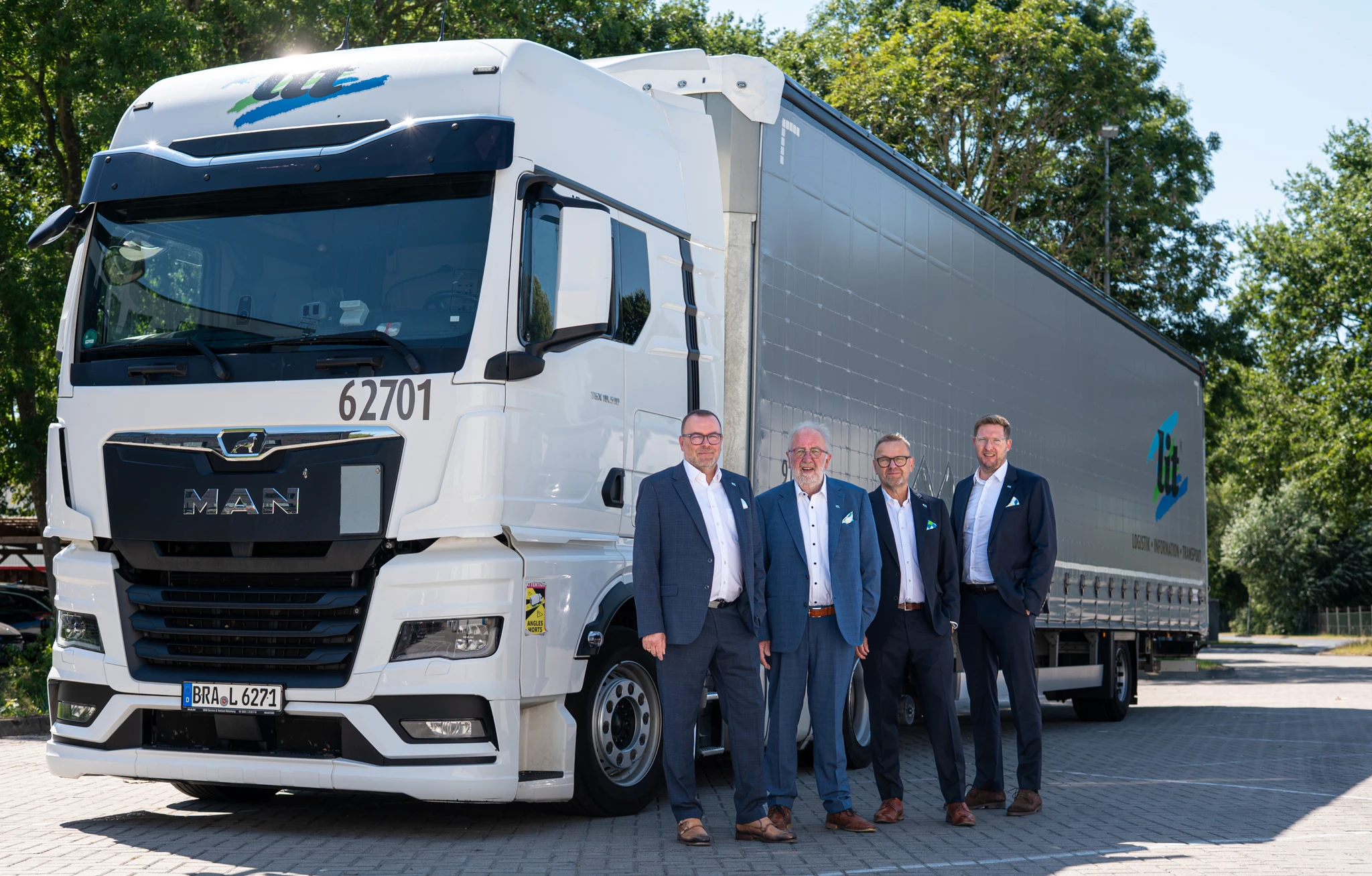
The past year was marked by crises, resource shortages, and rapid price fluctuations – yet it was also defined by stabilization and closer collaboration to chart new pathways together.
Other structural issues continue to weigh on the sector – most notably the shortage of qualified personnel. L.I.T. established lenk.kraft GmbH as a dedicated driver recruitment company and was recently re-certified with the IHK »TOP Training Company« seal. Is this the key to mitigating the bottleneck? INGO SCHREIBER As a company, we must act strategically and proactively to address these ongoing workforce shortages. The competition for qualified talent remains fierce. By founding lenk.kraft, we established a dedicated recruitment and HR consultancy entity to increase our agility in the driver market. This enables us to target prospective drivers more effectively through direct-sourcing channels while continuously refining our talent acquisition structures and processes. JULIAN LACHNITT Naturally, vocational training remains a core strategic priority for us: our goal is to retain high-potential young talent within L.I.T. over the long term and offer them clear career development pathways from day one. For instance, we have already created permanent employment offers for all apprentices graduating this coming January, securing tomorrow’s skilled workforce today. SIMEON BREUER Particularly in the Ostwestfalen-Lippe region, we benefit from a strong network of interconnected locations: Hölkemeier Spedition GmbH in Minden, Porta Westfalica, Bad Oeynhausen, and Vlotho; WESTFALIA intralog GmbH in Herford; and L.I.T. Speditions GmbH in Minden. This cross-site network allows our apprentices to gain exposure across multiple business areas. Commercial apprentices, for example, can gain practical experience in warehouse operations or contract logistics. Early rotation across divisions provides our trainees with a broad skill set, enhancing both their professional development and our ability to retain and advance high-potential talent within the Group over the long term, fostering a deeply integrated corporate culture from day one. |
»Naturally, the ongoing conflicts in the Middle East affect us on a daily basis.«
– Simeon Breuer, Board Member of the L.I.T. Group
Cross-departmental and inter-company collaboration has long been a hallmark of the L.I.T. Group. How does this manifest in daily operations, particularly across international locations? FOKKE FELS Our guiding principle is to think globally and act locally. What works at our headquarters in Brake cannot simply be transposed to our Spanish office in Zaragoza, as regional regulatory frameworks, market dynamics, and client expectations differ significantly. A key driver of our success is working toward shared group-wide objectives and unified quality standards while granting local teams the flexibility to execute them according to regional market requirements. SIMEON BREUER In 2026, L.I.T. Spedition expanded its footprint by opening new locations in Milan, Mâcon, and Foetz. We provide the local managing directors – Davide Cardani in Italy and Matthias Védrines in France and Luxembourg – with the operational autonomy required to focus entirely on core business activities, customer relationships, and regional growth. Administrative functions, such as invoicing, compliance, and IT support, are centralized at our Shared Service Center in Brake, while transport flows are managed via a unified, group-wide TMS, ensuring seamless operational alignment and real-time visibility across borders. All three new branches achieved profitability within a short period, validating our expansion playbook. A primary driver behind this rapid success is leaders like Cardani and Védrines, who joined L.I.T. with deep domain expertise, strong regional networks, and a clear mandate to scale operations in their respective markets while keeping overhead lean. Speaking of new locations and entities: What other strategic expansions took place in 2026? SIMEON BREUER At the beginning of the year, we integrated the Dutch freight forwarding company Olof MTT B.V. in Klundert into the Group, aimed at reinforcing our transport capacity and expanding freight routes connecting Benelux and Germany with the United Kingdom. JULIAN LACHNITT In addition, we founded L.I.T. Energy Solutions GmbH, consolidating all energy and mobility initiatives across the Group under a single entity for the first time. This forms the operational foundation for the cost-effective deployment of commercial electric vehicles. Electromobility can no longer be evaluated in isolation: electric trucks require dedicated charging infrastructure, which in turn demands high-performance grid connections and cost-efficient power supply. The most economical energy supply is generated, stored, and managed on-site. Only through the seamless integration of these components can the full economic and ecological potential of fleet electrification be realized across our network. Looking ahead to the future – what lies ahead for the L.I.T. Group in 2027? FOKKE FELS Having successfully completed our key strategic initiatives for 2026, we have further stabilized our position and laid a solid foundation for sustainable growth. This allows us to maintain a cautiously optimistic outlook: If we continue to drive cross-departmental collaboration, 2027 promises to be a successful year for L.I.T., marked once again by targeted expansion, efficiency gains, and profitable growth. INGO SCHREIBER Logistics remains the central engine of the economy. Everything produced must ultimately be transported to customers, and with ongoing market consolidation, we are confident in our position for 2027 as L.I.T. continues to expand its footprint in the European logistics market. |
|
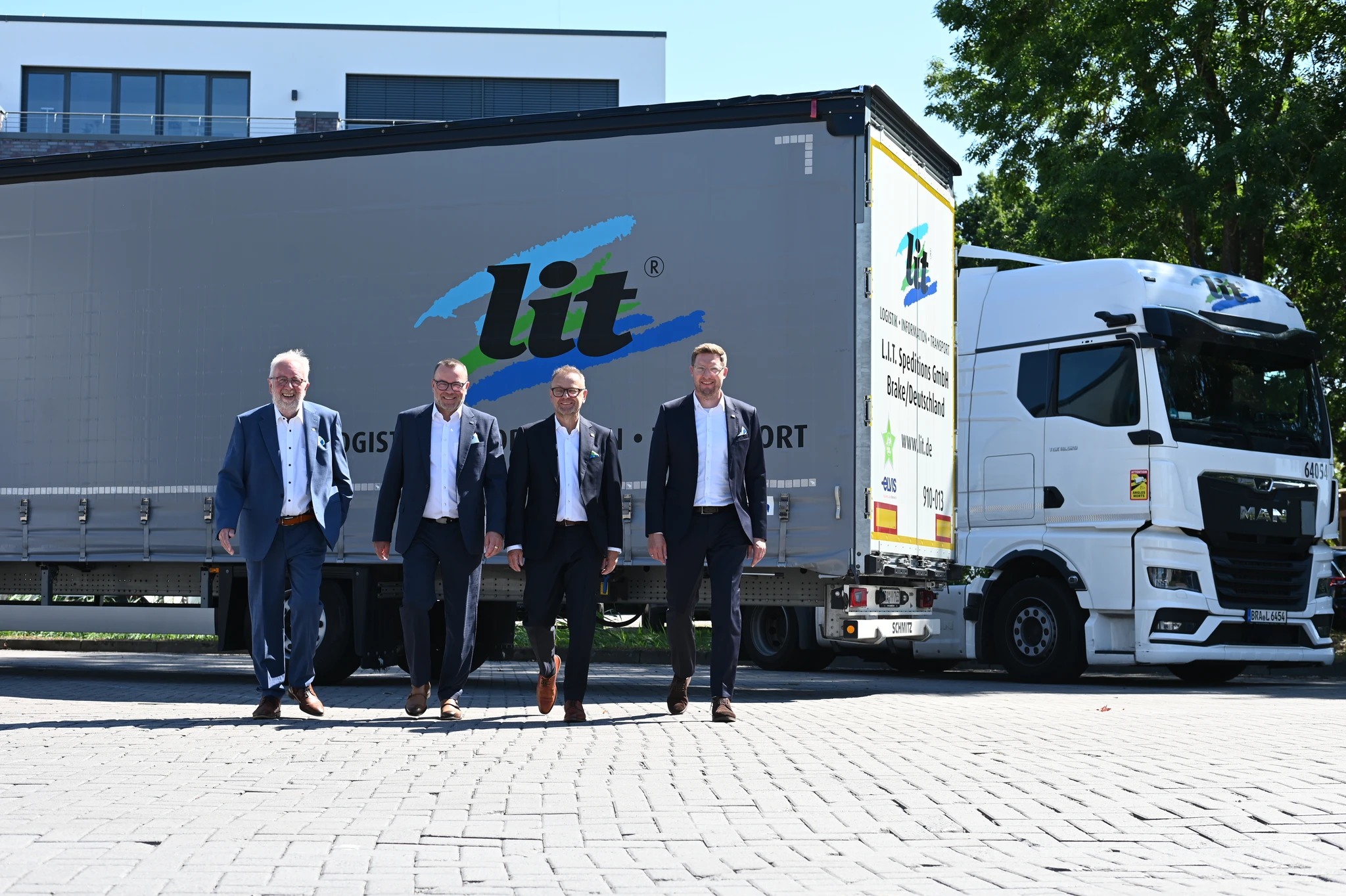
With a sharp focus on 2027, the L.I.T. Board is prioritizing consolidation and deeper integration across all Group entities.